
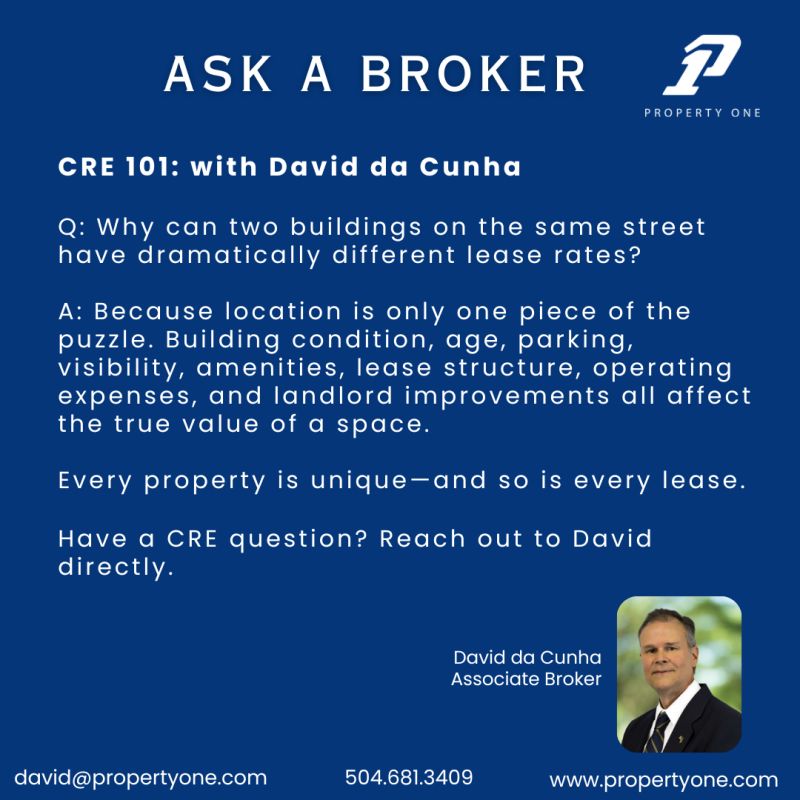
Why can two buildings on the same street have dramatically different lease rates?
It is a common question in commercial real estate, and the answer is simple: an address does not tell the whole story.
Two properties may be next door to each other but have significantly different lease rates based on the building itself, the space being offered, the lease structure, and current market conditions.
What Can Affect a Commercial Lease Rate?
Several factors can influence how much a tenant pays for space, including:
Building age and condition
Newer buildings or recently renovated properties may command higher rates because of updated building systems, finishes, and overall condition. An older building may have a lower rate but could also require more tenant improvements.
Office finish and quality of improvements
The condition and quality of the interior space can affect its value. A move-in-ready space with modern finishes may have a different lease rate than a space requiring significant renovation or build-out.
Parking availability
The amount, location, and convenience of parking can be an important consideration, particularly for office, medical, and retail users.
Visibility and accessibility
Properties with prominent visibility, convenient access, strong signage opportunities, or easy access to major roads may command different rates than properties with less visibility or accessibility.
Building amenities and features
Amenities such as conference facilities, fitness areas, common areas, security, upgraded building systems, or other tenant conveniences can affect the overall value of a property.
Operating expenses and lease structure
The advertised lease rate does not always represent the tenant’s total occupancy cost. Depending on the lease structure, tenants may also be responsible for expenses such as property taxes, insurance, and common area maintenance. Lease structures can include full-service gross, modified gross, or NNN leases, and the exact responsibilities depend on the lease agreement.
Landlord concessions
A landlord may offer incentives such as a tenant improvement allowance, free rent, or other concessions. These incentives can affect the overall economics of a deal even when the quoted rental rate appears higher.
Market demand and vacancy
Supply and demand also influence lease rates. A property in a market with limited available space may be priced differently from a similar property in an area with higher vacancy.
Why the Lowest Lease Rate Isn’t Always the Lowest Cost
When comparing properties, it is important to look beyond the quoted rental rate.
A property with a lower asking rate may require more tenant improvements, have higher operating expenses, offer less parking, or provide fewer amenities. Another property with a higher rate may include better finishes, more favorable concessions, or other features that affect the total cost of occupancy.
The best comparison is not simply “What is the rent?” but “What am I getting for that rent, and what will my total occupancy cost be?”
What Should Tenants Compare?
When evaluating multiple properties, consider:
- Rental rate
- Operating expenses
- Lease structure
- Tenant improvement allowance
- Free rent or other concessions
- Parking
- Building condition and finishes
- Accessibility and visibility
- Amenities
- Lease term and renewal options
Looking at these factors together provides a more complete picture of the value of each property.
Ask a Broker
Commercial lease rates can vary significantly, even between properties located on the same street. Understanding what is included in the quoted rate and comparing the total economics of each option can help tenants make a more informed decision.
Have a commercial real estate question you’d like answered? Reach out to David da Cunha.