
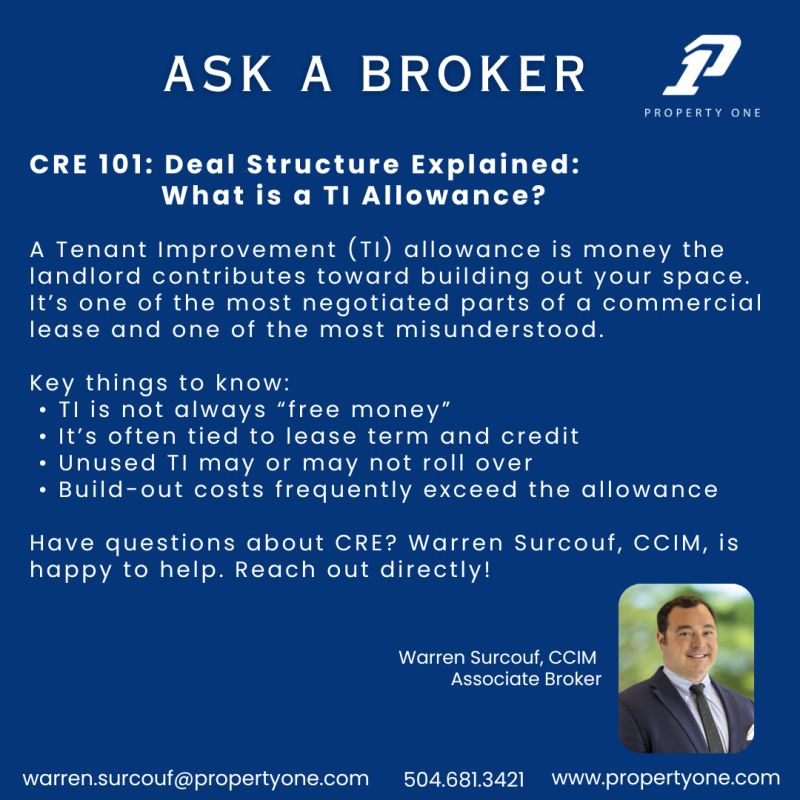
A Tenant Improvement (TI) allowance is money a landlord contributes toward building out a commercial tenant’s space.
A TI allowance is an important and sometimes misunderstood part of a commercial lease. While it can help offset the cost of preparing a space for a tenant’s business, the amount and terms of the allowance can vary significantly from one deal to another.
What Is Included in a TI Allowance?
A TI allowance is generally used toward improvements to a commercial space, such as interior construction, finishes, flooring, lighting, or other improvements agreed upon as part of the lease.
The specific improvements covered by the allowance depend on the lease terms and the agreement between the landlord and tenant.
What Factors Affect a TI Allowance?
Many tenants assume a TI allowance is simply “free money.” In reality, the allowance is typically negotiated as part of the overall lease deal and may be influenced by several factors, including:
- Length of the lease
- Tenant credit
- Scope of the build-out
- Market conditions
The amount of the allowance can also vary based on the type and condition of the space and the improvements required.
What Happens If Build-Out Costs Exceed the TI Allowance?
One important consideration for tenants is that build-out costs can exceed the TI allowance.
When that happens, the tenant may be responsible for the additional costs, depending on the terms of the lease and construction agreement.
That’s why it’s important to look at the TI allowance as part of the total cost of the deal, rather than evaluating the allowance separately from rent and other lease terms.
Understanding how the TI allowance is structured can help tenants better evaluate different commercial spaces and negotiate a lease that aligns with their business needs.
Ask a Broker
If you’re evaluating a commercial space or negotiating a new lease, Warren Surcouf III, MBA, CCIM can help you understand the different components of a commercial real estate deal.
Contact Warren to learn more about commercial real estate leasing and how deal structure can affect the overall cost of your space.