
When negotiating an office lease, the rental rate is important, but it is far from the only term that can affect your business.
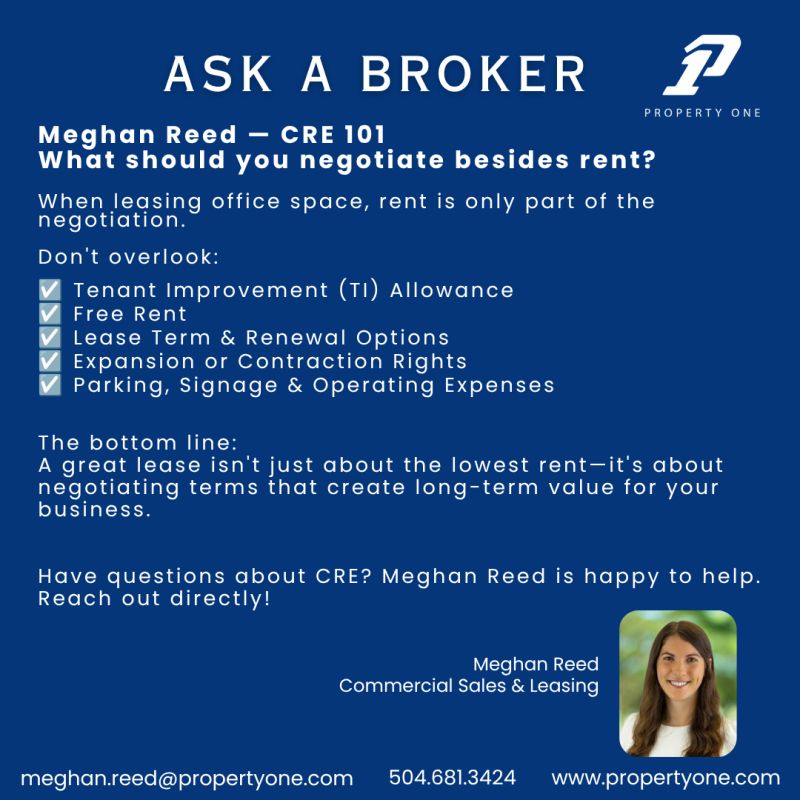
We asked Meghan Reed: “What should you negotiate besides rent?”
Here are several lease terms tenants should consider when evaluating an office space.
Tenant Improvement (TI) Allowance
A landlord may contribute toward the cost of customizing or building out a tenant’s space. The amount and permitted uses of a tenant improvement allowance can vary depending on the property, market conditions, lease term, and scope of work.
A TI allowance can reduce a tenant’s upfront build-out costs, but it is important to understand exactly what expenses are covered and what costs remain the tenant’s responsibility.
Free Rent
Depending on market conditions and the terms of the lease, a landlord may offer a period of free or abated rent, often at the beginning of the lease term.
Free rent can affect the effective cost of a lease, so tenants should consider the entire lease economics rather than looking only at the stated rental rate.
Lease Term and Renewal Options
The length of the lease and the terms governing future renewals can have a significant impact on a business.
A longer lease may provide greater occupancy stability, while renewal options can give a tenant the ability to remain in a location beyond the initial lease term. The specific terms, including renewal periods and any rent adjustments, should be carefully reviewed.
Expansion or Contraction Rights
Businesses can change over time. Tenants may be able to negotiate options that address future growth or downsizing needs.
Depending on the property and lease, these provisions could address the ability to expand into additional space, give back a portion of the premises, or otherwise adjust the amount of space occupied.
Parking and Signage
Parking and signage can be important considerations, particularly for businesses that regularly have employees, customers, patients, or clients visiting the property.
Tenants should understand what parking is available and whether there are restrictions or additional costs. Signage rights, locations, visibility, and approval requirements can also be important parts of the lease negotiation.
Operating Expenses and Lease Structure
The rental rate does not always represent a tenant’s total occupancy cost.
Depending on the lease structure, tenants may be responsible for some or all property operating expenses, such as common area maintenance, property taxes, and insurance. Understanding how these expenses are calculated and handled can be just as important as the base rental rate.
Why Does It Matter?
A lease negotiation is about more than achieving the lowest rental rate. The terms of the lease can affect a business’s upfront costs, ongoing occupancy expenses, flexibility, and ability to adapt as its needs change.
When comparing office spaces, tenants should look at the overall economics and terms of the lease, not just the asking rent.
Ask a Broker
Have questions about office leasing or commercial real estate? Meghan Reed with Property One, Inc. can help you evaluate the factors that may affect your commercial lease.