
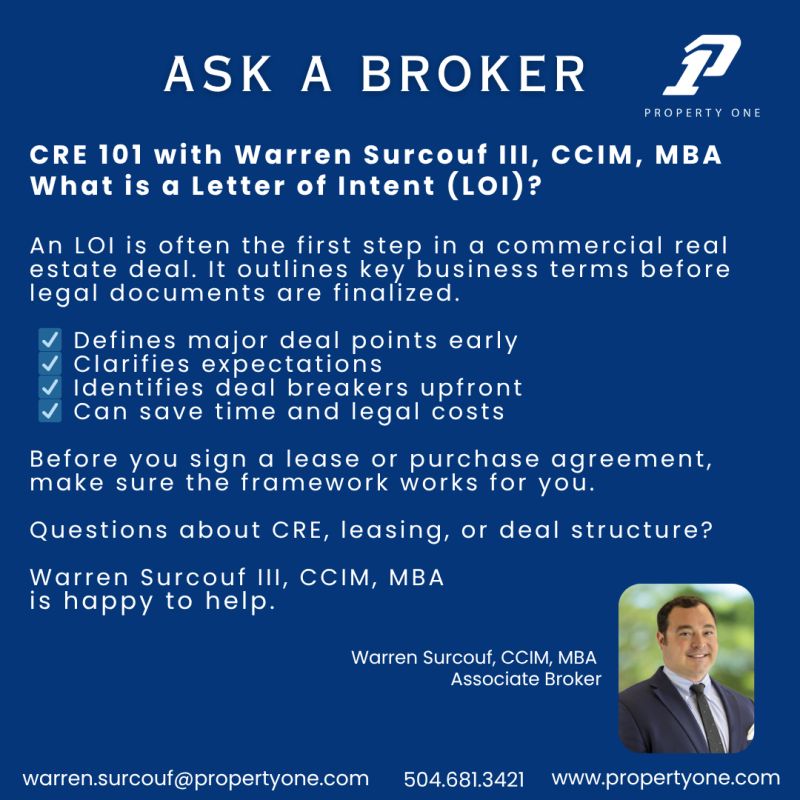
Before many commercial real estate transactions become binding leases or purchase agreements, the parties often begin by negotiating a Letter of Intent, commonly called an LOI.
An LOI outlines the major business terms the parties are considering and can provide a framework for the formal documents that follow.
What Does a Letter of Intent Include?
The specific terms vary depending on the transaction, but a commercial real estate LOI may address items such as:
- Purchase price or proposed rent
- Lease term
- Renewal options
- Tenant improvement (TI) allowance
- Security deposit
- Contingencies
- Due diligence periods
- Closing or occupancy timelines
- Other important business terms
The LOI gives the parties an opportunity to discuss the major components of a transaction before moving into the preparation and negotiation of formal legal documents.
Why Is an LOI Important?
It Sets the Framework
An LOI establishes the major business terms under consideration. Having those terms outlined early can give both parties a clearer understanding of the proposed transaction.
It Can Help Reduce Time and Costs
Negotiating major business points before drafting detailed legal documents can help identify areas of agreement and disagreement earlier in the process.
It Clarifies Expectations
An LOI can put important deal points in writing, including rent or purchase price, lease term, TI allowance, contingencies, renewal options, and key dates.
It Can Identify Potential Deal Breakers
If the parties cannot agree on an important business term, the LOI stage provides an opportunity to address the issue before significant time and expense are invested in completing the transaction.
Is a Letter of Intent Binding?
Many commercial real estate LOIs are intended to be non-binding, meaning the parties do not intend for the LOI itself to constitute the final lease or purchase agreement.
However, an LOI is not automatically non-binding simply because it is called a “Letter of Intent.” The language of the document matters, and certain provisions may be intended to have legal effect.
Because of this, parties should understand the terms and legal implications of an LOI before signing it. An attorney can advise on the legal effect of specific language and provisions.
What Happens After an LOI?
Once the parties reach agreement on the proposed business terms, the transaction can move forward to the formal documentation and due diligence stages.
For a lease, this may involve negotiating and executing a commercial lease. For a purchase, the parties may move into due diligence, financing, purchase agreement negotiations, and ultimately closing, depending on the transaction.
The LOI does not replace the formal legal documents. Instead, it can provide a starting framework for the next stage of the transaction.
Ask a Broker
With experience spanning brokerage, finance, operations, and commercial transactions, Warren Surcouf III, MBA, CCIM works with clients on commercial real estate transactions and deal structure.
A broker can help clients understand the business terms of a proposed transaction, negotiate key deal points, and coordinate with the other professionals involved in the transaction.
Have questions about commercial real estate, leasing, or deal structure? Contact Warren to learn more.