
When evaluating office space, one of the most overlooked details is the difference between Rentable Square Feet (RSF) and Usable Square Feet (USF).
A space advertised as 5,000 square feet does not necessarily mean your business will have 5,000 square feet of space it exclusively occupies.
What Is Usable Square Feet?
Usable Square Feet (USF) generally refers to the space a tenant occupies and uses exclusively.
This can include areas such as:
- Private offices
- Workstations
- Conference rooms
- Break rooms
- Private storage
- Other space within the tenant’s premises
The exact measurement can vary depending on the building and the applicable measurement standard.
What Is Rentable Square Feet?
Rentable Square Feet (RSF) generally includes a tenant’s usable space plus an allocated share of certain common areas within the building.
Common areas may include:
- Lobbies
- Hallways
- Shared restrooms
- Common amenity areas
- Other areas shared by multiple tenants
Because tenants share these areas, a portion of the common space may be allocated to each tenant when determining the amount of rentable space.
What Is a Load Factor?
The relationship between rentable and usable space is commonly expressed through a load factor, also called a common area factor.
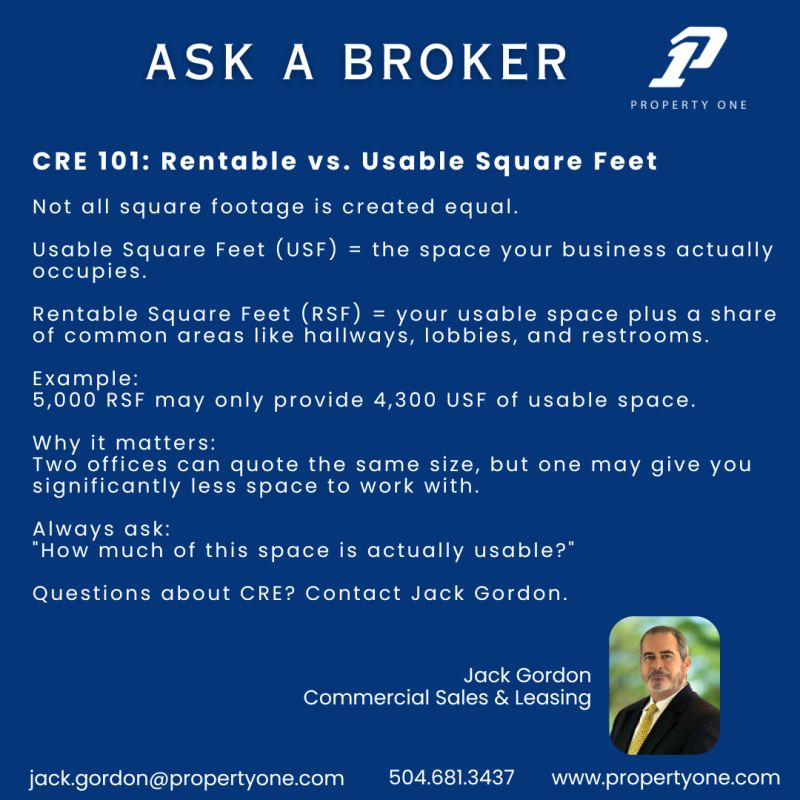
For example, a tenant may lease 5,000 RSF but have approximately 4,300 USF of actual usable space.
The additional rentable area reflects the tenant’s allocated share of common areas.
The calculation can vary by property and measurement standard, so tenants should confirm how the building calculates rentable and usable square footage before comparing spaces.
Why Does the Difference Matter?
The distinction between RSF and USF can affect how tenants compare office spaces and evaluate occupancy costs.
Two properties may each advertise approximately 5,000 RSF, but the amount of usable space available to the tenant may differ.
If one building has a higher load factor, the tenant may receive less private usable space for the same amount of rentable square footage.
That’s why tenants should look beyond the advertised square footage when evaluating potential office space.
What Should Tenants Ask?
When comparing office properties, tenants should consider asking:
- How much usable square footage is included?
- How much rentable square footage will be leased?
- What load factor or common area factor is being applied?
- What areas are included in the rentable calculation?
- How does the square footage affect the total rental cost?
- Is the same measurement standard being used to compare each property?
Understanding these numbers can make it easier to compare office spaces based on both cost and the amount of space your business can actually use.
Ask a Broker
With experience in commercial real estate, Jack Gordon works with businesses evaluating office space and commercial leasing opportunities.
A commercial real estate broker can help tenants compare properties, understand how space is measured, evaluate lease costs, and identify factors that may affect the functionality and economics of a potential office location.
Have questions about commercial real estate or office leasing? Contact Jack to learn more.